
 Cloud Security & Compliance
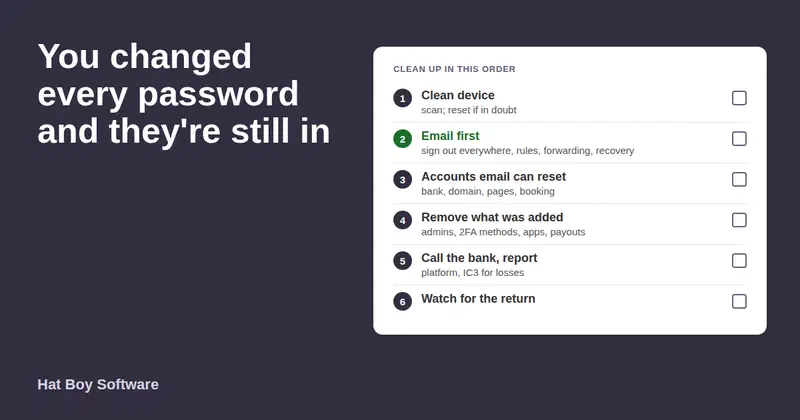
You changed every password and they're still in
Why an attacker can return after you reset every password, and the order to clean up in: device, then email, then everything email can reset.
Field notes from building and auditing regulated cloud estates.
These articles come from security work on Azure estates and the platforms that run on them: what a SIEM is actually detecting and what it costs, what “HSM-backed encryption” covers resource by resource, why a private endpoint may not be carrying your traffic, how to roll out an EDR agent without breaking the machines that already have one, tenant isolation that fails closed inside the ORM, and what to secure when the one engineer who understood a platform leaves. Client names are withheld unless the client agreed to be named.
For the engineering behind the notes, see Cloud Security & Compliance.
10 articles
Cloud Security & ComplianceWhy an attacker can return after you reset every password, and the order to clean up in: device, then email, then everything email can reset.
Wiring DocuSign embedded signing with JWT Grant: why invalid_grant hides the cause, the consent step, demo vs production, CSP, return URLs and branding.
A step-by-step guide to DocuSign embedded signing with JWT Grant: account setup, consent, tokens, envelopes, the signing view, evidence and going live.
 Cloud Security & Compliance
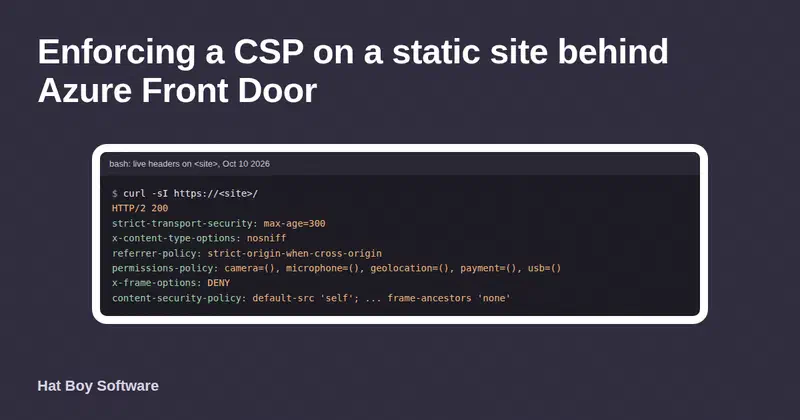
How we took a static site from no security headers to an enforced CSP with zero refusals: what we removed first, report-only checks, Front Door and HSTS.
 Cloud Security & Compliance
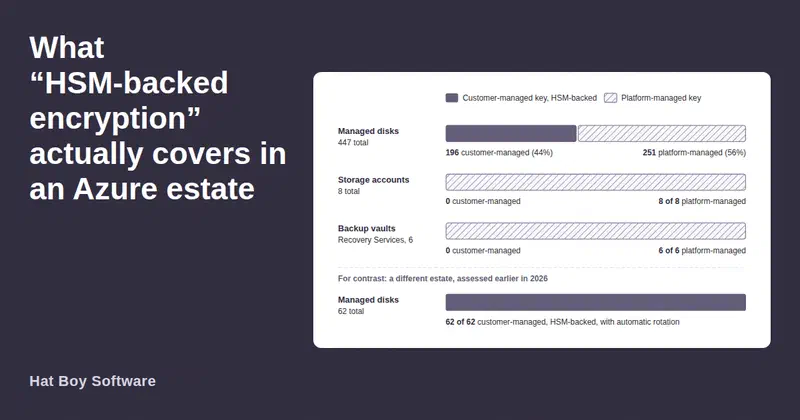
HSM-backed describes who holds the key, not how strong the encryption is. How to state Azure encryption-at-rest coverage per resource type, with evidence.
 Cloud Security & Compliance
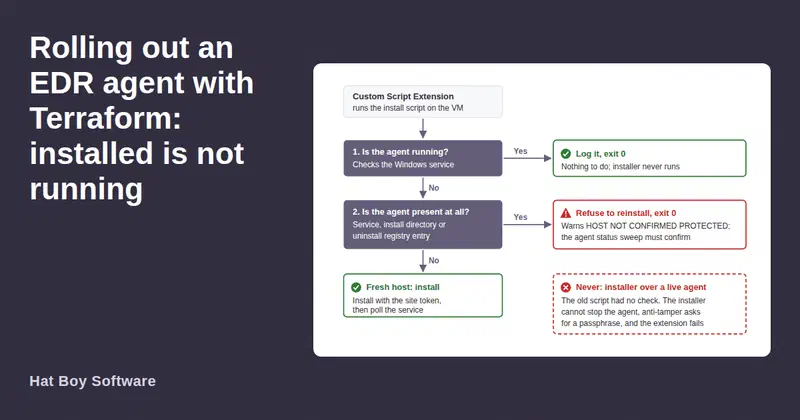
How to make an Azure Custom Script Extension safe to run against VMs that already carry an EDR agent, and keep the site token out of the repository.
 Cloud Security & Compliance
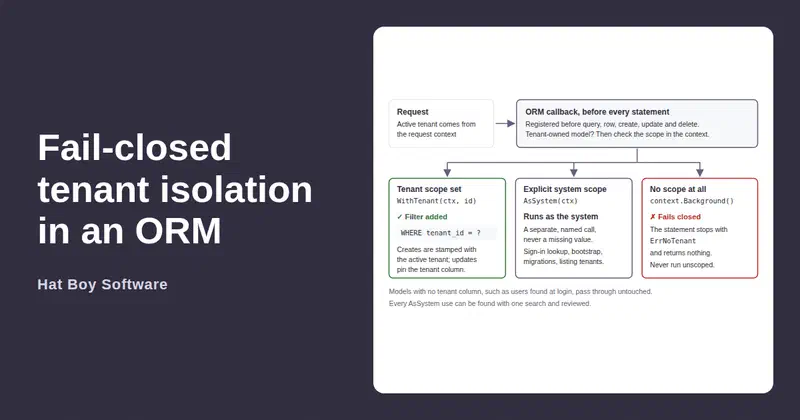
How Omnisnia enforces tenant isolation in GORM callbacks that refuse unscoped queries, with an explicit system scope, tests, and where RLS fits.
A private endpoint existing does not mean traffic uses it. Two DNS problems that kept Azure OpenAI calls on the public endpoint, and how to check yours.
A continuity checklist for when the one engineer who understood your platform leaves: secrets, state, credentials, access and ground truth.
Four lessons from reducing Sentinel and Log Analytics cost for a healthcare client, including the cheaper table plan that silently emptied 33 detections.
AI assistant for Hat Boy Software
Ask about our services, get help with an existing project, or ask to talk to a person.
Chat isn't available right now. You can still reach us: